Catalog
Search
78 products
View:
- Selected: 0Areas of use
- Selected: 0Item names
- Selected: 0Manufacturer
- Selected: 0Made in
- Selected: 1Additional
View:
78 products
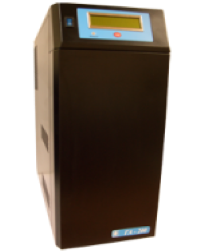
Nitrogen generator GA-200
from
282 000 ₽
Nitrogen generators are designed to create an inert atmosphere, fill low-pressure tanks, "rinse" test tubes with inert gas and other applications that require a large, by laboratory standards, nitrogen consumption with reduced requirements for its purity.
Technical specifications
Volume fraction of nitrogen is not less than % by volume (including impurities of inert gases — argon, neon, helium) 99.6
Volume fraction of oxygen is not more than, % vol. 0,4
Volume fraction of water vapor is not more than, % vol. 0.002 (20 ppm)
Maximum nitrogen capacity is at least 200 (3.33 l/min), l/h
Maximum nitrogen outlet pressure is not less than 3.5 ati
The time of setting the operating mode for single-shift operation is no more than 30 min
Nominal inlet air pressure is 6 ati
Maximum allowable inlet air pressure is 8 ati
Minimum inlet air pressure is 5 ati
Compressed air consumption, at nominal inlet pressure and maximum flow rate is no more than, l/h, 1200 (20 l/min)
Power consumption is not more than, VA, 100
Overall dimensions (width x depth x height) are not more than, mm, 230x525x510;
Weight is not more than 26 kg
Working conditions:
ambient temperature, C°, from +10 to +35
Electric power supply from
single-phase AC mains voltage, V, 220± 10%
and frequency, Hz, 50 ± 1
Average full service life is at least 6 years
The generator for electrical safety meets the requirements of Class 1, type H according to GOST 12.2.025-76
NPP Himelektronika
Moscow
Produced in: Moscow
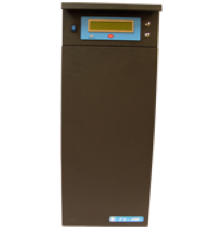
Nitrogen generator GA-600
from
444 000 ₽
The nitrogen generator is designed to create an inert atmosphere, fill low-pressure tanks, "wash" test tubes with inert gas and other applications that require a large, by laboratory standards, nitrogen consumption with reduced requirements for its purity.
Technical specifications
Volume fraction of nitrogen is not less than 99.5 % by volume (including impurities of inert gases — argon, neon, helium)
Volume fraction of oxygen is not more than 0.5 % vol.
Volume fraction of water vapor is not more than 0.002 % vol. (20 ppm)
Maximum nitrogen capacity:
at an inlet air pressure of 8 ati is at least 600 l/h (10 l/min)
at an inlet air pressure of 6 ati is at least 480 l/h (8 l/min)
The time of setting the operating mode for single-shift operation is no more than 30 min
Nominal inlet air pressure is 8 ati
Maximum allowable inlet air pressure is 8.5 ati
Minimum inlet air pressure is 7.5 ati
Compressed air consumption, at nominal inlet pressure and maximum flow rate is no more than 3600 l/hour (60 l/min)
Overall dimensions, (width x depth x height) are not more than 230x580x680 mm
Weight is not more than 32 kg
Working conditions:
ambient temperature, C°, is from +10 to +35
Electric power supply from
single-phase AC mains voltage, V, 220± 10%
and frequency, Hz, 50 ± 1
Average full service life is at least 6 years
The generator for electrical safety meets the requirements of Class 1, type H according to GOST 12.2.025-76
NPP Himelektronika
Moscow
Produced in: Moscow
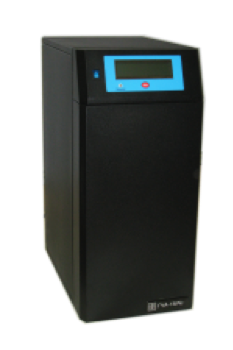
Pure nitrogen generator GCHA-60
from
342 000 ₽
The pure nitrogen generator (hereinafter referred to as the generator) is designed to produce in laboratory conditions nitrogen of the highest purity that is used to power analytical instruments (chromatographs, including those equipped with an electronic capture detector, express analyzers of hydrogen content in metals, organic carbon concentration meters, sample evaporators, etc.).
Technical specifications
The grade of nitrogen produced according to GOST 9293-74 is high purity, grade I
Volume fraction of nitrogen is not less than, % by volume (including impurities of inert gases — argon, neon, helium) 99.999
Volume fraction of oxygen is not more than, % vol. 0.0005 (5 ppm)
Volume fraction of water vapor is not more than, % vol. 0.0007 (7 ppm)
The volume fraction of the sum of carbon-containing compounds in terms of methane is not more than, % vol. (ppm)
* (with a methane content in the supply air of not more than 4 ppm) 0.0003 (3 ppm)
Maximum nitrogen capacity is not less than 60 l/hour (1.0 l/min)
Nominal output pressure of nitrogen with the throttle open) is 4 ati
The time of setting the operating mode for single-shift operation is no more than 45 min.
Nominal inlet air pressure is 6 ati
Maximum allowable inlet air pressure is 8 ati
Minimum inlet air pressure is 5.5 ati
Compressed air consumption, at nominal inlet pressure and maximum flow rate is no more than, l/hour, 1800 (30 l/min)
Power consumption is not more than, VA, 100
Overall dimensions, (width x depth x height) are not more than, mm, 220x540x670
Weight is not more than, kg 32
Working conditions:
ambient temperature, C°, from +10 to +35
Electric power supply from
single-phase AC mains voltage, V, 220± 10%
and frequency, Hz, 50 ± 1
Average full service life is at least 6 years
The generator for electrical safety meets the requirements of Class 1, type H according to GOST 12.2.025-76
NPP Himelektronika
Moscow
Produced in: Moscow
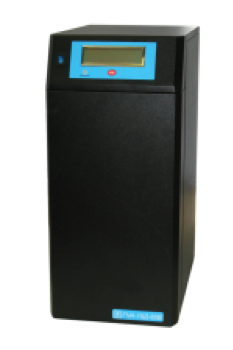
Generator of Pure Nitrogen and Zero Air GCHA-15D-40V-K
from
462 000 ₽
The generator is designed to produce nitrogen of the highest purity and zero air in laboratories.
Differences from the GCHA-15D-60V: lower air performance; the presence of a built-in oil-free compressor ensures complete autonomy of the device.
The warranty for the device is 18 months, for the built-in compressor is 12 months from the date of sale.
Technical specifications
The grade of nitrogen produced according to GOST 9293-74 is high purity, grade I
Volume fraction of nitrogen is not less than 99,999 % vol.
(including impurities of inert gases — argon, neon, helium)
Volume fraction of oxygen is not more than 0.0005 % vol. (5 ppm)
Volume fraction of water vapor in nitrogen is not more than 0.0007 % vol. (7 ppm)
Volume fraction of the sum of carbon-containing compounds in nitrogen in terms of methane is not more than 0.00001 % vol. (0.1 ppm)
Maximum nitrogen capacity is not less than 15 liters/hour (250 ml/min)
Nominal output pressure of nitrogen is 4 ati
Volume fraction of water vapor in the generated air is not more than 0.0007 % vol. (7 ppm)
The volume fraction of the amount of hydrocarbons in the produced air in terms of methane is not more than, 0.00001% vol. (0.1 ppm), (with a concentration of methane in the supply air not more than 5 ppm)
Maximum air capacity is not less than 40 liters/hour (670 ml/min)
Nominal output air pressure is not less than 3.5 ati
The time of setting the operating mode for single-shift operation is no more than 45 min
Noise level generated by the compressor is no more than 50 dB
Power consumption is not more than 300 VA
Overall dimensions, (width x depth x height) are not more than 230x470x510 mm
Weight is not more than 27 kg
Operating conditions:
ambient temperature, ° C, from +10 to +35
electric power supply from a single-phase AC network with voltage, V, 220 ± 10%
and frequency, Hz, 50 ± 1
Average full service life is at least 6 years
The generator meets the electrical safety requirements of class 1, type H according to GOST 12.2.025-76
NPP Himelektronika
Moscow
Produced in: Moscow
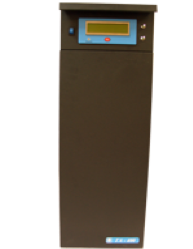
Nitrogen generator GA-400-N
from
432 000 ₽
The GA-400-N nitrogen generator (hereinafter referred to as the generator) is a modification of the GA-400 nitrogen generator and is designed primarily to work with a storage tank (receiver) in which a certain "reserve" of nitrogen can be created. Unlike the GA-400, the GA-400-H generator has a built-in pressure monitoring system for nitrogen accumulated in the receiver, which puts the generator into "standby" mode when the maximum pressure value is reached in the receiver, and restarts the generator when the pressure drops below the minimum value. This work allows you to reduce energy consumption and increase the service life of the compressor feeding the generator.
Technical specifications
Volume fraction of nitrogen is not less than 99.5% by volume (including impurities of inert gases — argon, neon, helium)
Volume fraction of oxygen is not more than 0.5 % vol.
Volume fraction of water vapor is not more than 0.002 % vol.(20 ppm)
Maximum nitrogen capacity, with nitrogen pressure in the storage tank below 2 ati, is not less than 400 l/hour (6.66 l/min)
Nominal inlet air pressure is 6 ati
Maximum allowable inlet air pressure is 8 ati
Minimum inlet air pressure is 5.5 ati
Compressed air consumption, at nominal inlet pressure and maximum flow rate is no more than 3000 l/h (50 l/min)
Factory setting of the maximum pressure value in the storage tank is 3.5± 0.2 ati
Factory setting of the minimum pressure value in the storage tank is 2.4 ±0.4 ati
Power consumption is not more than 100 VA
Overall dimensions, (width x depth x height) are not more than 230x580x680 mm;
Weight is not more than 35 kg
Working conditions:
ambient temperature, C°, from +10 to +35
Electric power supply from
single-phase AC mains voltage, V, 220± 10%
and frequency, Hz, 50 ± 1
Average full service life is at least 6 years
The generator for electrical safety meets the requirements of Class 1, type H according to GOST 12.2.025-76
NPP Himelektronika
Moscow
Produced in: Moscow
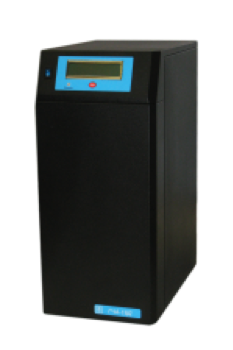
Pure Nitrogen Generator GCHA-18D-K
from
408 000 ₽
The characteristics of the device are similar to the GCHA-18D model;
The difference is that the oil–free compressor built into the GCHA-18D-K generator provides complete autonomy of the device.
The warranty for the device is 18 months, for the built-in compressor - 12 months from the date of sale.
Technical specifications
The grade of nitrogen produced according to GOST 9293-74 is high purity, grade I
The volume fraction of nitrogen is not less than, % vol.
(including impurities of inert gases: argon, neon, helium) 99,999
The volume fraction of oxygen is not more than, % vol. (ppm) 0.0005 (5 ppm)
The volume fraction of water vapor is not more than, % vol. (ppm) 0.0007 (7 ppm)
The volume fraction of hydrogen is not more than, % vol. (ppm) 0.0002 (2 ppm)
The volume fraction of the sum of carbon-containing compounds in terms of methane is not more than, % vol. (ppm)
(with a concentration of methane in the supply air not more than 5 ppm)* 0.00001 (0.1 ppm)
Maximum nitrogen capacity is not less than 18 liters/hour (300 ml/min)
Nominal output pressure of nitrogen is 4 ati
The time of setting the operating mode for single-shift operation is no more than, min, * 45
Noise level generated by the compressor is no more than 45 dB
Power consumption is not more than 300 VA
Overall dimensions, (width x depth x height) are not more than, mm 230x470x510
Weight, not more than, kg 25
Working conditions:
Ambient temperature, °C from +10 to +35
Electric power supply from a single-phase AC network with a voltage of 220 ± 10%
and a frequency of 50 ± 1 Hz
Average full service life is at least 6 years
The generator for electrical safety meets the requirements of Class 1, type H according to GOST 12.2.025-76
NPP Himelektronika
Moscow
Produced in: Moscow
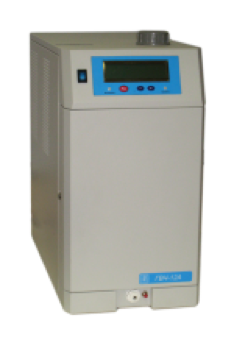
Pure Hydrogen Generator GVCH-36D
from
315 600 ₽
The generator is designed to produce hydrogen of the highest purity used to power analytical instruments (chromatographs, gas analyzers, etc.).
Technical specifications
Purity of hydrogen in terms of dry gas is about 99.998%
The concentration of water vapor at 20 OC and 1atm is not more than 10 ppm
In the output pressure stabilization mode
The range of the specified output pressure of hydrogen is from 1.5 to 6.1 ati
Stability of the output pressure of hydrogen is not worse than ± 0.02 ati
Maximum hydrogen capacity reduced to normal conditions is 36 l/h
The time of setting the operating mode, with the output turned off is no more than 20 minutes
In the performance stabilization mode:
The range of the specified hydrogen performance is from 0 to 36 l/h
Maximum developed pressure in performance mode is 5.0 ati
Volume of distilled water to be poured is 1.0 l
Distilled water consumption is not more than 0.06 l/hour
Water consumption is 2.4 g/l of hydrogen
The average life of a replaceable deionization filter cartridge (at maximum performance and single-shift operation) is at least 0.5 years
Average power consumption:
in stationary mode is no more than 250 VA
maximum (at startup) is no more than 300 VA
Overall dimensions of the generator, (width x depth x height) are not more than 230x470x450 mm
The mass of the generator is not more than 18 kg
Operating conditions:
ambient temperature, °C, from +10 to +35
powered by single-phase AC voltage, V, 220 (+10 -15)%
and frequency, Hz, 50 +1
The generator for electrical safety meets the requirements of Class 1, type H according to GOST 12.2.025-76
NPP Himelektronika
Moscow
Produced in: Moscow
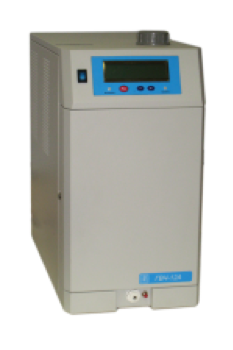
Pure hydrogen generator GVCH-25A
from
402 000 ₽
The characteristics of the device are similar to the GVCH-12A model.
The difference is the generator capacity of 25 liters / hour, the purity of the produced hydrogen is lower (99.9995% vol).
Technical specifications
Purity of hydrogen in terms of dry gas шы about 99.9995%
Concentration of water vapor at 20OC and 3 atm is no more than 7 ppm
Total hydrogen capacity reduced to normal conditions is 25 l/h
The range of the specified output pressure of hydrogen is from 3.0 to 6.1 ati
Stability of the output pressure of hydrogen is not worse than ± 0.02 ati
The time of setting the operating mode, with the output turned off is no more than 30 min
Volume of distilled water to be poured is 1.0 l
Distilled water consumption is no more than 0.04 l/h
Water consumption is 1.6 g/l of hydrogen
The average life of a replaceable deionization filter cartridge (at maximum performance and single-shift operation) is at least 0.5 years
Average pump life (for single-shift operation) is at least 0.5 years
Power consumption:
in stationary mode is no more than 250 VA
maximum (at startup) is no more than 280 VA
Overall dimensions of the generator, (width x depth x height) is not more than 230x470x450 mm
The mass of the generator is. not more than 18 kg
Operating conditions:
ambient temperature, °C, from +10 to +35
powered by single-phase AC voltage, V, 220 (+10 -15)%
and frequency, Hz, 50 +1
The generator for electrical safety meets the requirements of Class 1, type H according to GOST 12.2.025-76
NPP Himelektronika
Moscow
Produced in: Moscow
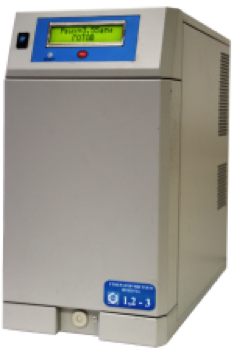
Pure Air Generator GCHV-1,2-3,5
from
186 000 ₽
The generators are designed to supply analytically clean air to flame ionization detectors and gas analyzers. They are available in two versions depending on performance and output pressure. Thanks to the presence of a system of catalytic purification of air from hydrocarbons, the generator can significantly improve the accuracy and sensitivity of chromatographic analyses.
Technical specifications
Air capacity reduced to normal conditions is not less than 1.2 l/min
Outlet air pressure is 355 ± 5% kPa(3.5 ati)
Output pressure stability at constant flow rate is not worse than ± 5 kPa
Stability of the output pressure when the flow rate changes from 0.3 l/min to the maximum value is not worse than ± 7 kPa
Output concentration of hydrocarbons is not more than 0.1 ppm
The concentration of water vapor at 20°C and 100kPa, is no more than 10 ppm
Ready time after switching on is no more than 30 min
Power consumption is not more than 150 VA
Overall dimensions of the generator (width x depth x height) are not more than 230x470x450 mm
The mass of the generator is not more than 15 kg
Working conditions:
ambient temperature, °C from +10 to +35
relative humidity of the ambient air, % 80
power supply from a single-phase network:
AC voltage, 220 ± 10%
and frequency, Hz 50 ± 1
NPP Himelektronika
Moscow
Produced in: Moscow
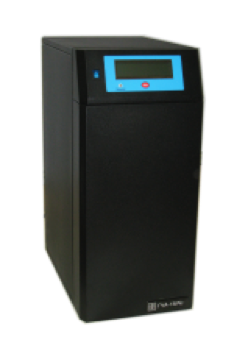
Pure nitrogen Generator GCHA-15-K
from
340 800 ₽
The characteristics of the device are similar to the GCHA-18-K model.
The difference is the generator capacity of 15 liters /hour.
An oil-free compressor is also built into the generator, which ensures complete autonomy of the device.
The warranty for the device is 18 months, for the built–in compressor - 12 months from the date of sale.
Technical specifications
The grade of nitrogen produced according to GOST 9293-74 is high purity, grade I
The volume fraction of nitrogen is not less than, % by volume (including impurities of inert gases — argon, neon, helium) 99.999
The volume fraction of oxygen is not more than, % vol. (ppm) 0.0005 (5 ppm)
The volume fraction of water vapor is not more than, % vol. (ppm) 0.0007 (7 ppm)
The volume fraction of hydrogen is not more than, % vol. (ppm) 0.0002 (2 ppm)
The volume fraction of the sum of carbon-containing compounds in terms of methane is not more than, % vol. (ppm) (with a methane content in the supply air of not more than 4 ppm) 0.0003 (3 ppm)
The maximum volume of nitrogen production is not less than 15 liters/hour (250 ml/min)
Nominal output pressure of nitrogen is 4 ati
The time of setting the operating mode for single-shift operation is no more than, min,* 45
Noise level generated by the compressor is no more than 45 dB
Power consumption is not more than 200 VA
Overall dimensions, (width x depth x height), not more than, mm, 230x470x510
Weight, not more than, kg 23
Working conditions:
ambient temperature, C°, from +10 to +35
Electric power supply from
single-phase AC mains voltage, V, 220± 10%
and frequency, Hz, 50 ± 1
Average full service life are at least 6 years
The generator for electrical safety meets the requirements of Class 1, type H according to GOST 12.2.025-76
NPP Himelektronika
Moscow
Produced in: Moscow
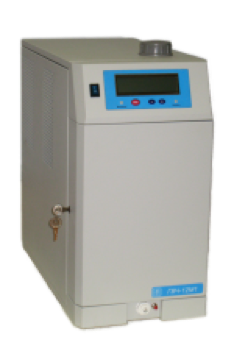
Pure Hydrogen Generator GVCH-12M1
from
190 800 ₽
The characteristics of the device are similar to the GVCH-12A model; the difference is in the absence of an autoregeneration system for fine gas filters.
Technical specifications
Purity of hydrogen in terms of dry gas is about 99.9999%
The concentration of water vapor at 20 ° C and 1 atm is not more than 5 ppm
In the output pressure stabilization mode
The range of the specified output pressure of hydrogen is from 1.5 to 6.1 ati
Stability of the output pressure of hydrogen is not worse than ± 0.02 ati
Maximum hydrogen capacity reduced to normal conditions is 12 l/h
The time of setting the operating mode, with the output turned off is no more than 30 min
In the performance stabilization mode:
The range of the specified hydrogen performance is from 0 to 12 l/h
Maximum developed pressure in performance mode is 5.0 ati
Volume of distilled water to be poured is 1.0 l
Distilled water consumption is no more than 0.02 l/hour
Water consumption is 1.6 g/l of hydrogen
The average life of a replaceable deionization filter cartridge (at maximum performance and single-shift operation) is at least 1 year
Average power consumption:
in stationary mode is no more than 150 VA
maximum (at startup) is no more than 200 VA
Overall dimensions of the generator, (width x depth x height) are not more than 230x470x450 mm
The mass of the generator is not more than 15 kg
Operating conditions:
ambient temperature, °C, from +10 to +35
powered by single-phase AC voltage, V, 220 (+10 -15)%
and frequency, Hz, 50 ± 1
The generator for electrical safety meets the requirements of Class 1, type H according to GOST 12.2.025-76
NPP Himelektronika
Moscow
Produced in: Moscow
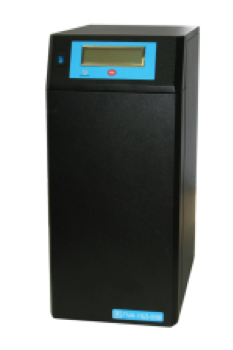
Generator of Pure Nitrogen and Zero Air GCHA-21D-72V
from
450 000 ₽
It is intended for obtaining nitrogen of the highest purity and zero air in laboratory conditions.
The warranty period of operation of the generator is 18 months from the date of sale by the manufacturer.
Technical specifications
The grade of nitrogen produced according to GOST 9293-74 is high purity, grade I
Volume fraction of nitrogen is not less than 99,999 % vol.
(including impurities of inert gases — argon, neon, helium)
Volume fraction of oxygen is not more than 0.0005 % vol. (5 ppm)
Volume fraction of water vapor in nitrogen is not more than 0.0007 % vol. (7 ppm)
The volume fraction of hydrogen in nitrogen is not detected
Volume fraction of the sum of carbon-containing compounds in nitrogen in terms of methane is not more than 0.00001 % vol. (0.1 ppm)
Maximum nitrogen capacity is not less than 21 liters/hour (350 ml/min)
Nominal output pressure of nitrogen is 4 ati
Volume fraction of water vapor in the generated air is not more than 0.0007 % vol.(7 ppm)
The volume fraction of the amount of hydrocarbons in the produced air in terms of methane is not more than 0.00001 % vol. (0.1 ppm), (with a concentration of methane in the supply air not more than 5 ppm)
Maximum air capacity is not less than 72 liters/hour (1200 ml/min)
Nominal output air pressure is not less than 3.5 ati
The time of setting the operating mode for single-shift operation is no more than 45 min
Nominal inlet air pressure is 6.0 ati
Maximum allowable inlet air pressure is 7 ati
Minimum inlet air pressure is not less than 5.5 ati
Compressed air consumption, at nominal inlet pressure is no more than 480 l/h (8 l/min)
Power consumption is not more than 150 VA
Overall dimensions, (width x depth x height) are not more than 230x525x510 mm
Weight is not more than 28 kg
Operating conditions:
ambient temperature, ° C, from +10 to +35
electric power supply from a single-phase AC network with voltage, V, 220 ± 10%
and frequency, Hz, 50 ± 1
Average full service life is at least 6 years
The generator meets the electrical safety requirements of class 1, type H according to GOST 12.2.025-76
NPP Himelektronika
Moscow
Produced in: Moscow